The Early Days of Flight
By Bruce Shawkey
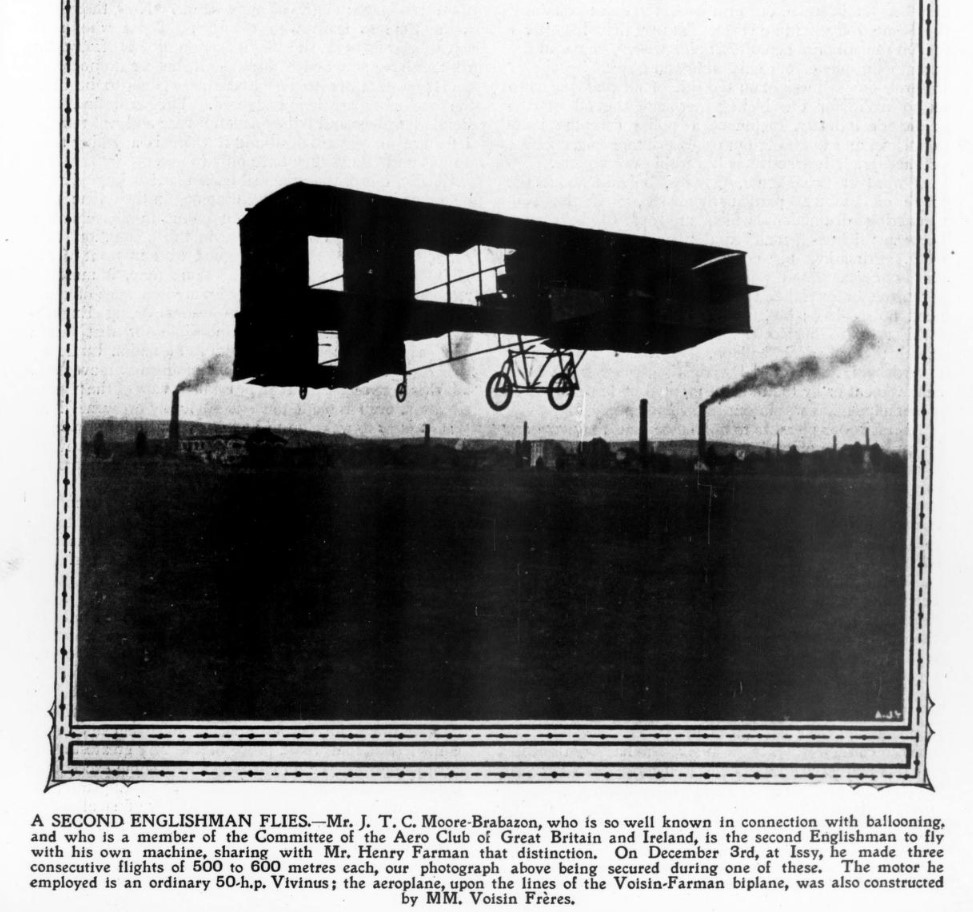
Found this interesting magazine online devoted to the early years of the airplane. The magazine was called "Flight" and was published in Britain, though coverage was also given to developments in America, notable the Wright brothers. Note that flight lengths were stated in "meters," not miles.
Later issues covered the dawn of commercial and military aviation.
The Wright brothers' success in building and demonstrating the Wright Military Flyer for the U.S. Army Signal Corps in 1909 marked a significant moment in the history of military aviation. This marked the first time a military organization officially acquired an aircraft for its use.


Ironically, Santos hoped that the airplane would be used for the good of humanity, and not as a weapon of war. History would prove him wrong.
Early Military Applications; Reconnaissance and Observation:
Early military aircraft were primarily used for reconnaissance and observation, providing a new vantage point for military commanders to assess enemy positions and movements.
World War I (1914-1918):
The use of aircraft in the military expanded significantly during World War I. The war saw the development of aerial combat, bombing, and other military applications of aircraft.
One of the earliest fight pilots was Manfred Albrecht Freiherr von Richthofen (May 1892 to April 1918), known in English as the Red Baron. He was a fighter pilot with the German Air Force during World War I. He is considered the ace-of-aces of the war, being officially credited with 80 air combat victories.
Use of the airplane would escalate to the dropping of the first atomic bomb at Hiroshima Japan, which ultimately killed between 150,000 to 246,000 civilians. The exact number is not even known due to records that were lost and delayed deaths due to radiation poisoning.
Of course we can't talk about airplanes without discussing Orville and Wilbur Wright.
 |
| Orville Wilbur |
The first flight was made on December 17, 1903, at Kill Devil Hill, near Kitty Hawk, North Carolina. The brothers eachmade two flights on that day. The first flight, made by Orville Wright, lasted 12 seconds and covered 120 feet. The final flight, made by Wilbur Wright, lasted 59 seconds and covered 852 feet.
Their plane, which they called the Flyer I (it is today popularly called the Kitty Hawk), cost less than a thousand dollars to build.
It had a wing span of about 40 feet and weighed about 750 pounds. It had a 12-horsepower engine, which weighed only 170 pounds. Incidentally, the original airplane is now in the National Air and Space Museum, in Washington, D.C. Their workshop/bicycle shop was disassembled and reassembled and now is situated in Greenfield Village in Dearborn, Mich. Wilbur died at age 45 of typhoid fever. Orville made it to age 77, dying in 1948 of lung congestion and coronary arteriosclerosis,


Comments
Post a Comment